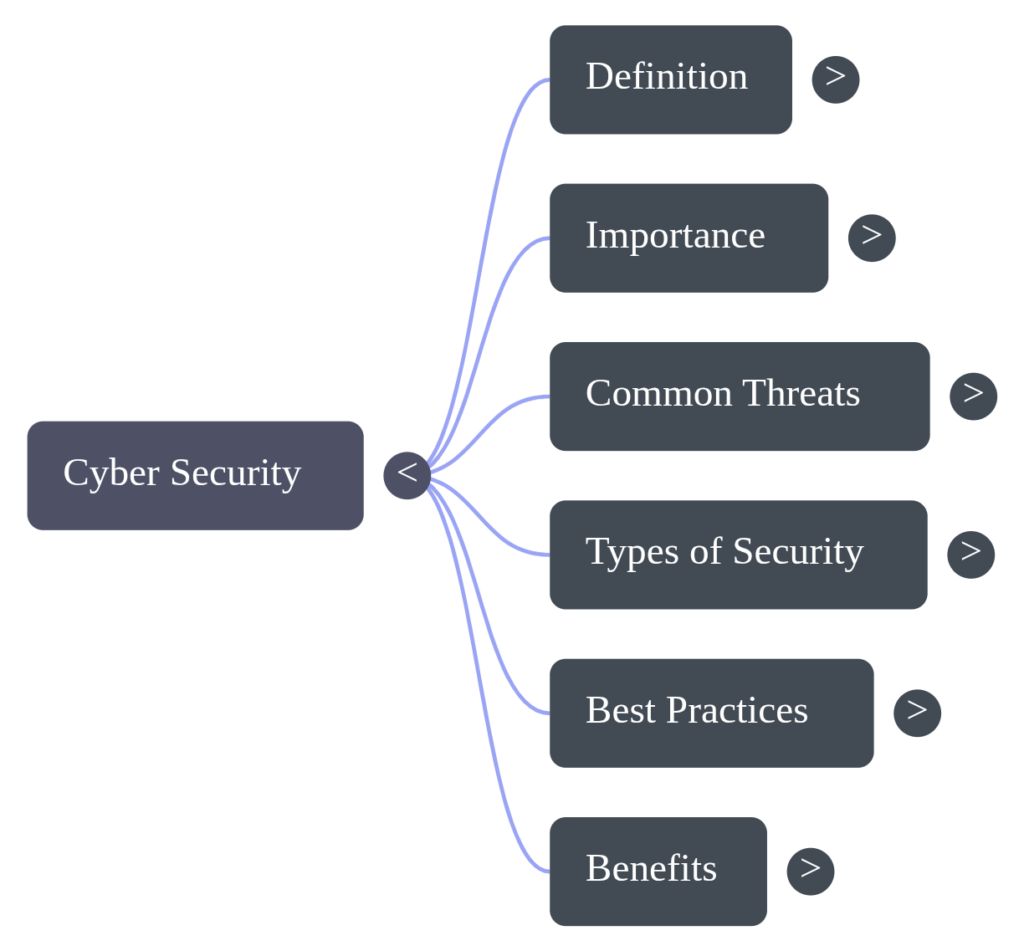
What is Cyber Security?
Cyber security is the practice of protecting computers, mobile devices, networks, applications, and digital data from unauthorized access.
Unauthorized access means protected by theft, damage, or cyberattacks.
It combines tech security processes, and user awareness. That process to keep safe information and ensure that our systems continue to operate securely.
As more of our daily online activities such as banking, shopping, studying, and communication. Due to it the importance of cyber security is growing. Individuals, businesses, schools, and governments all rely on cyber security to protect sensitive information and maintain trust in those services which are provided online.
Table of Contents
Why is Cyber Security Important?
Every day, cybercriminals attempt to steal passwords, financial information, personal data, and business secrets. Without proper security measures. These attacks will cause financial losses, identity theft, service disruptions, and damage to an organization’s reputation.
Cyber security is helpful for us:
- Protect personal and business data
- Prevent unauthorized access to our systems
- Reduce the risk of financial fraud or loss
- Ensure websites and applications are running safe
- Protect customer data and privacy
- Support compliance with security and privacy regulations
Example
Imagine you receive an email that appears to be from your bank. The email says:
“Your account has been temporarily locked. Now just Click here to verify your identity.”
The message looks like a real message and that includes the bank’s logo. You click the link and enter your username, password, and one-time verification code.
The user has no idea that it is not a real site and this site is capturing your data.
However, that website will be fake. That is created by a cybercriminal to copy your bank’s login details. By entering your credentials, you unintentionally give the attacker access to your account.
This type of attack is called phishing.
If your bank uses additional security for getting safe. Such as two step verification or multi-factor authentication, suspicious login detection, and account alerts, and if you recognize the warning signs before entering your information, the attack is much less likely to succeed. This illustrates how cyber security depends on both technical protections and informed user behavior.
Common Types of Cyber Threats
Malware
Malware is malicious software designed to harm devices or steal information. Common forms include viruses, worms, spyware, and Trojans.
Phishing
Phishing attacks trick people into revealing sensitive information through fake emails, websites, messages, or phone calls.
Ransomware
Ransomware encrypts files and demands payment in exchange for a decryption key. Even after payment, there is no guarantee that access will be restored.
Password Attacks
Weak or reused passwords can be guessed, stolen, or exposed in data breaches, allowing attackers to access accounts.
Data Breaches
A data breach occurs when confidential information is accessed or disclosed without authorization, often due to hacking, system vulnerabilities, or human error.
Types of Cyber Security
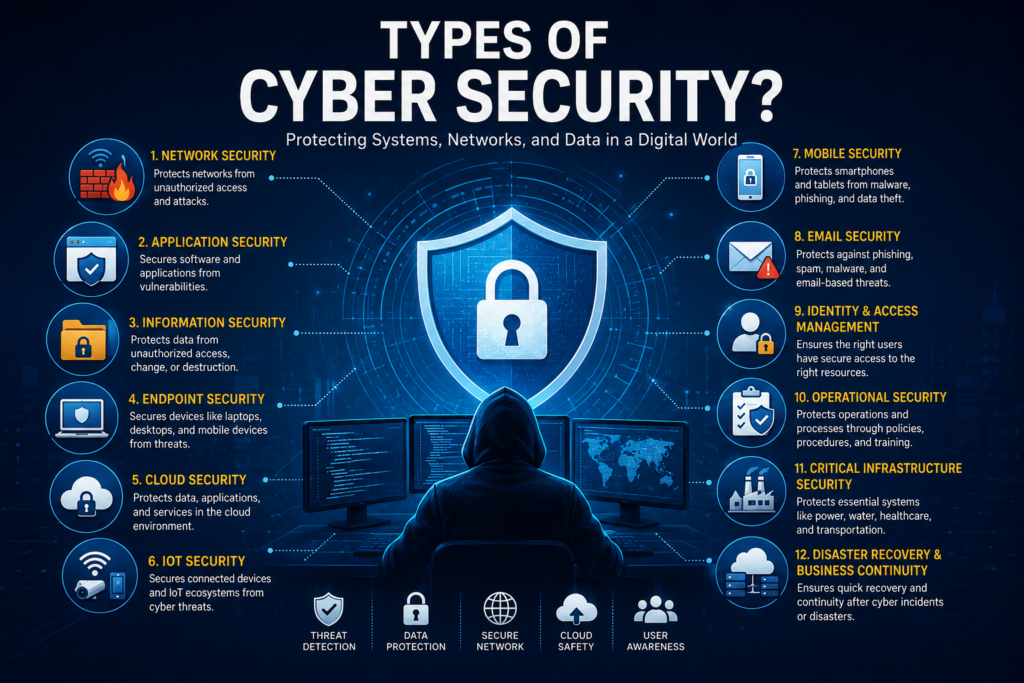
Network Security
Protects computer networks from unauthorized access and malicious activity using tools such as firewalls and intrusion detection systems.
Application Security
Focuses on making software and web applications secure throughout their development and maintenance.
Information Security
Protects sensitive data from unauthorized access, modification, or destruction, whether the data is stored or transmitted.
Cloud Security
Secures cloud-based infrastructure, applications, and data through proper configuration, access controls, and monitoring.
Endpoint Security
Protects devices such as laptops, desktops, smartphones, and tablets from malware and other cyber threats.
Is there a future for cyber security?
Yes. Cybersecurity has a very strong future. Cyber Security demand is expected to remain high as businesses, governments, cloud platforms, AI systems, and connected devices. Because it become more dependent on digital technology.

Why Cybersecurity Has a Strong Future
- Cyberattacks are increasing
Ransomware, phishing, data breaches, and identity theft continue to evolve.
- AI is creating new security challenges
Attackers can use AI to automate attacks, while defenders use AI for threat detection and response.
- Cloud security is growing
Companies are moving applications and data to cloud platforms, creating greater demand for cloud security professionals.
- IoT and smart devices are expanding
More connected devices mean more potential attack surfaces.
- Data protection is becoming critical
Organizations need to protect customer, financial, and business data.
- Cybersecurity regulations are increasing
Organizations must meet stronger security and privacy requirements.
Career Opportunities
Cybersecurity offers roles such as:
- Security Analyst
- SOC Analyst
- Penetration Tester / Ethical Hacker
- Network Security Engineer
- Cloud Security Engineer
- Incident Responder
- Digital Forensics Analyst
- Security Engineer
- Application Security Engineer
- Cybersecurity Consultant
For beginners: Start with networking, Linux, operating systems, basic programming, and security fundamentals. Then move into areas such as ethical hacking, SOC operations, cloud security, or digital forensics.
Best Practices for Staying Safe Online
Follow these simple cyber security habits:
- Use strong, unique passwords for every account.
- Enable multi-factor authentication (MFA) whenever available.
- Keep your operating system and software up to date.
- Avoid clicking suspicious links or opening unexpected attachments.
- Download software only from trusted sources.
- Back up important files regularly.
- Use reputable antivirus and security software.
- Verify website addresses before entering sensitive information.
Benefits of Cyber Security
Effective cyber security provides several advantages:
- Protects personal and financial information
- Reduces the risk of cyberattacks
- Builds trust with customers and users
- Supports business continuity
- Helps organizations meet legal and regulatory requirements
- Protects intellectual property and confidential data
Conclusion
Cyber security is an essential part of modern life. It involves protecting digital systems, networks, and information from a wide range of cyber threats. Whether you are using online banking, shopping on the internet, or running a business, understanding basic cyber security principles can significantly reduce your risk.
By combining good security technologies with safe online habits, individuals and organizations can better protect themselves against evolving cyber threats.
FAQ
What is cyber security in simple words?
Cyber security is the practice of protecting computers, networks, software, and digital information from hackers, malware, and other cyber threats.
What is the most common cyber attack?
Phishing is one of the most common cyber attacks. It attempts to trick users into revealing passwords, financial information, or other sensitive data.
Why is cyber security important for businesses?
It helps businesses protect customer data, prevent financial losses, reduce downtime, and maintain customer trust.
Can individuals benefit from cyber security?
Yes. Good cyber security practices help protect personal information, online accounts, and financial data from theft and fraud.
Is cyber security a good career?
Yes. Cyber security is a growing field with strong demand for skilled professionals across industries, driven by the increasing need to protect digital systems and data.