Types of Cyber Security Complete Guide with Examples
As businesses and individuals rely more on digital technology, understanding the different types of cyber security has become essential.
This guide explains the major types of cyber security in simple wording, along with real examples. Show the working of them.
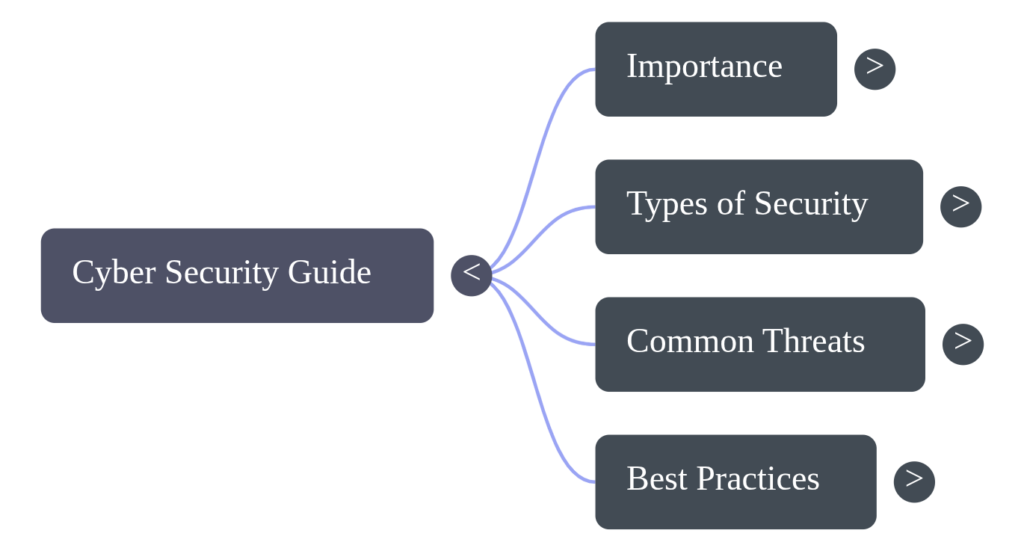
Table of Contents
Why Is Cyber Security Important?
Every day, millions of cyber attacks target individuals, businesses, hospitals, schools, and governments. A successful attack can do it:
- Financial losses
- Identity theft
- Data breaches
- Business tricks leak
- Reputation damage
- Legal consequences
Now using cyber security reduces these risks.
Types of Cyber Security
1. Network Security
Network security protects computer networks from unauthorized access, attacks, and malicious traffic. For network security we can use firewalls technology for securing networks, intrusion detection systems (IDS).We can use another technique is VPNs and network monitoring for network security.
Example
For Example A company allows our employees to work remotely. Then to prevent hackers from intercepting company data, employees connect by using a secure VPN or firewall for protection. Even if someone uses public Wi-Fi, their communication remains encrypted by using VPN or firewall.
2. Application Security
Application security focuses on protecting software and web applications from vulnerabilities during development and after deployment.
By using these techniques are:
- Secure coding
- Authentication
- Authorization
- Proper updates
- Security testing
Example
An online shopping website updates its software immediately after developers discover an SQL injection vulnerability then remove them. This prevents attackers from stealing customer payment information.
3. Information Security (Data Security)
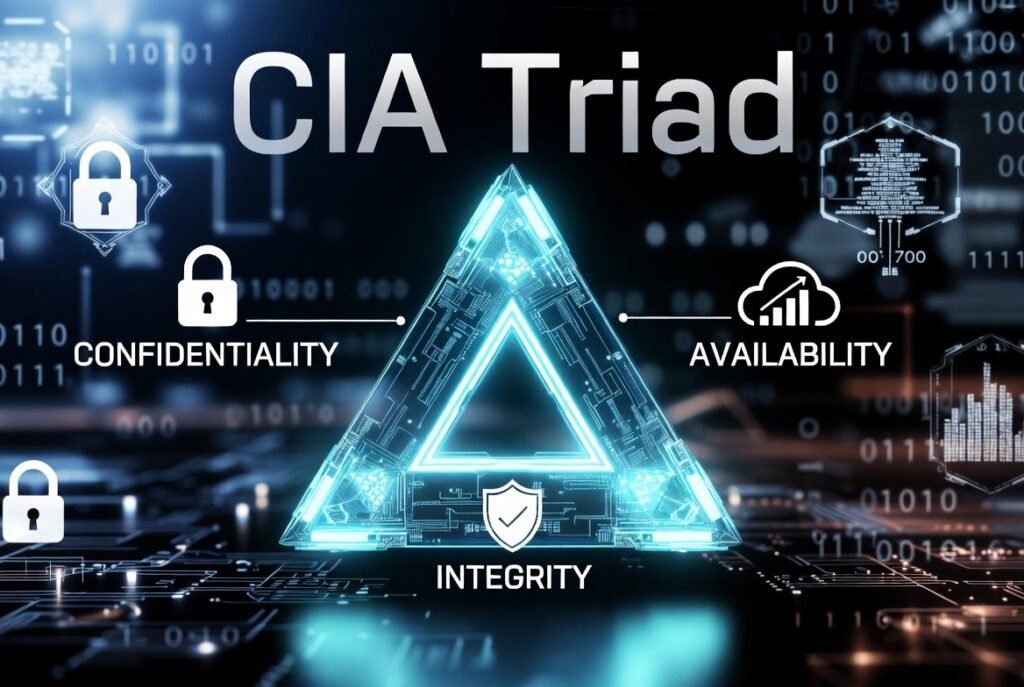
Information security protects your personal data from unauthorized access, modification, or destruction. The Cyber Security main goals are confidentiality, integrity, and availability (CIA Triad).
Example
A hospital encrypts patient records only for authorized doctors and nurses. Which can access medical information about the patient.
4. Endpoint Security
Endpoint security protects your devices which are connected with each other by a network. These devices may be including:
- Laptops
- Desktop computers
- Smartphones
- Tablets
- Servers
Protection usually used by antivirus software. Which provide endpoint detection and response (EDR), and device management.
Example
An employee by chance downloads a malicious file from an email. The company’s endpoint security software detects the malware immediately and alerts it before it spreads.
5. Cloud Security
Cloud security protects data, applications, and services which are hosted on cloud platforms like Amazon Web Services (AWS), Microsoft Azure, and Google Cloud etc.
Cloud security consist on following:
- Encryption
- Identity management
- Access controls
- Cloud firewalls
- Continuous monitoring
Example
A startup stores customer data on AWS. For data protection use Multi-factor authentication (MFA) and encrypted storage which prevent unauthorized users from accessing the database.
6. Internet of Things (IoT) Security
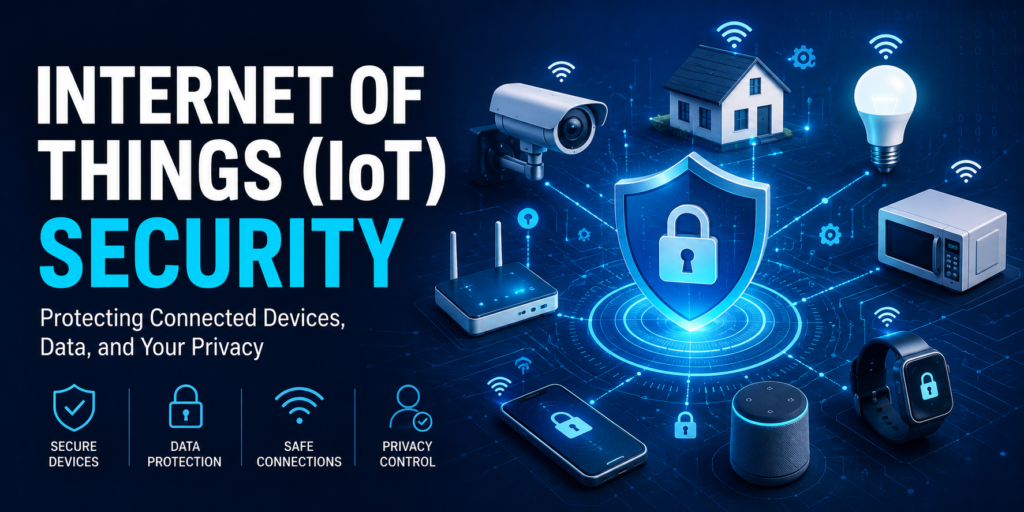
IoT security protects those devices which are connected by internet such as:
- Smart TVs
- Security cameras
- Smart locks
- Smart thermostats
- Medical devices
These devices often become targets. Because most users never change default passwords.
Example
A home owner changes the default password on a smart security camera and enables automatic firmware updates. Then it may be difficult for hackers to take control of your device.
7. Mobile Security
Mobile security protects smartphones and tablets from malware, phishing, spyware, and unauthorized access etc.
Best practices for secure your phone:
- Screen locks
- Biometric authentication
- Official app stores
- Device encryption
- Regular software updates
Example
A student loses a smartphone which has installed banking apps. That phone set fingerprint authentication for use and remote wipe. Then to a considerable extent protect your phone. Therefore no one can access personal information.
8. Email Security
Email security protects users from threats. Which was delivered through email.
That threats including:
- Phishing
- Spam
- Malware attachments
- Business Email Compromise (BEC)
Example
An employee receives an email pretending to be from the finance department. That is requesting a bank transfer. Email security identifies it as phishing and moves it to alerts before anyone clicks on the given link.
9. Identity and Access Management (IAM)
IAM ensures that only authorized users can access systems and use resources.
For that use common these methods are:
- Multi-factor authentication (MFA)
- Single Sign-On (SSO)
- Role-Based Access Control (RBAC)
- Password policies
Example
A university allows professors to access grading systems. While students can only view their own grades through role based permissions.
10. Operational Security (OPSEC)
Operational security just focuses on policies and procedures. That is to protect sensitive information during daily operations.
These are includes:
- User permissions
- Backup strategies
- Security policies
- Employee awareness
Example
A company restricts confidential project files. So, only team members are assigned to the project. that can access them.
11. Critical Infrastructure Security
Critical infrastructure security protects your systems essential to society. These are consist on:
- Power plants
- Water treatment facilities
- Transportation
- Telecommunications
- Hospitals
Example
An electricity provider continuously monitors your system. Its control systems to detect cyber attacks before they interrupt power to entire cities.
12. Disaster Recovery and Business Continuity
These strategies help organizations recover quickly after cyber incidents, hardware failures, or natural disasters.
They are include:
- Regular backups
- Recovery plans
- Redundant systems
- Incident response procedures
Example
A ransomware attack encrypts a company’s files. Because secure backups are available. The organization restores its systems within hours without paying the attackers.
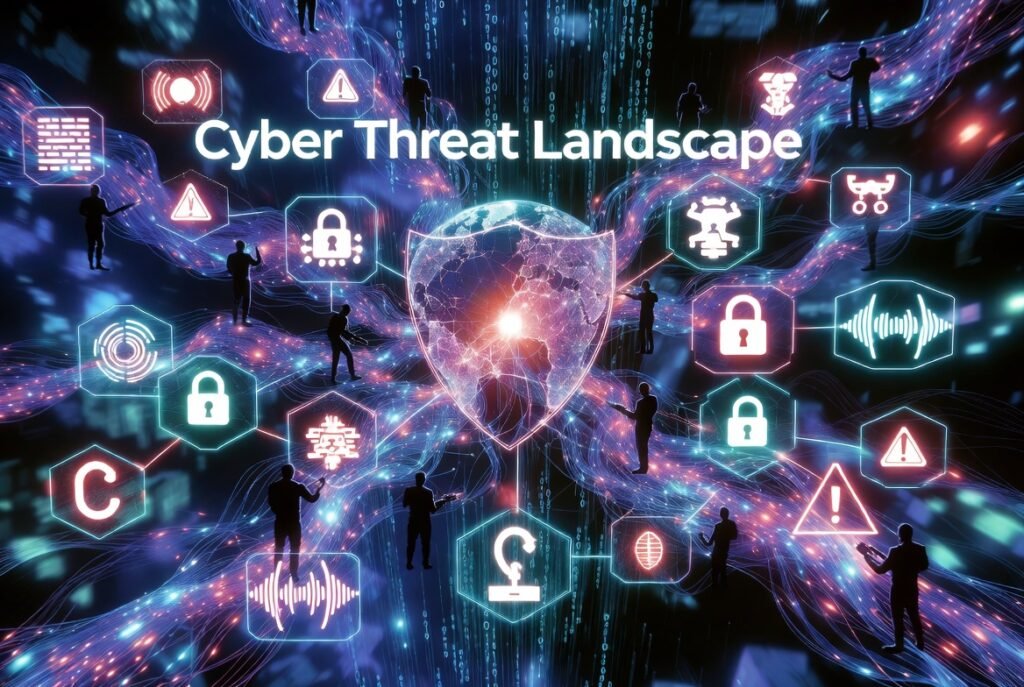
Common Cyber Security Threats
Understanding threats helps you choose the right security measures.
Common threats include:
- Malware
- Ransomware
- Phishing
- SQL Injection
- Cross-Site Scripting (XSS)
- Denial-of-Service (DoS)
- Distributed Denial-of-Service (DDoS)
- Insider threats
- Password attacks
- Zero-day exploits
Best Practices to Improve Cyber Security
Follow these practices to reduce cyber risks:
- Use strong, unique passwords.
- Enable multi-factor authentication.
- Keep software updated.
- Install trusted antivirus software.
- Back up important files regularly.
- Avoid clicking suspicious links.
- Use secure Wi-Fi networks.
- Encrypt sensitive data.
- Educate your employees and family members about phishing.
- Monitor systems for unusual activity.
Conclusion
Cyber security is not a single technology. That is a collection of strategies that protect different parts of your digital environment. From securing networks and cloud services to protecting mobile devices and sensitive information etc. Every type of cyber security plays a critical role in preventing cyber attacks.
Whether you are an individual, student, or business owner, understanding these types of cyber security. Which are helpful for you to make informed decisions and build stronger defenses against evolving cyber threats.
FAQ
What are the main types of cyber security?
The main types of cyber security include network security, application security, cloud security, endpoint security, information security, mobile security, IoT security, email security, IAM, operational security, critical infrastructure security, and disaster recovery.
Which type of cyber security is most important?
Every type is important because each protects a different part of an organization’s digital environment. A layered security approach offers the best protection.
What is IoT security?
IoT security protects internet-connected devices such as smart cameras, thermostats, wearable devices, and home automation systems from cyber threats.
Why is network security important?
Network security prevents unauthorized access, malware, ransomware, and other attacks by protecting communication between devices.
How can beginners improve cyber security?
Use strong passwords, enable multi-factor authentication, keep software updated, avoid suspicious links, install antivirus software, and back up important data regularly.